
Wine and cheese pairing works best when you match the cheese’s salt, fat, acidity, sweetness, and intensity before choosing the bottle. For a simple board, start with one sparkling wine, one crisp white, one lighter red, and cheeses that move from fresh to firm.
Sections
The real wine cheese principle isn’t whether red or white goes first, but texture first. Fresh cheeses should lift, bloomy rinds need freshness, hard cheeses need concentration and blue cheeses should usually go with something sweet.
Consult the experts for helpful shortcuts, but don’t rely on them as hard-and-fast rules. Wine Enthusiast’s simple cheese pairing guide is helpful for a refresher on the basics while Wine Folly’s classic pairing examples provides a quick mental reference for classic pairings you’re unlikely to forget.
Wine And Cheese Pairing Guide: Start With Cheese Style
Think in terms of categories: fresh, bloomy-rind, washed-rind, semi-soft, hard, blue, and melted. Each group gives you its own unique combination of milky acidity, salt, fat, rind smell, or umami punch. Use this to navigate your next pairing.
Here is the thing, though. A blue cheese wine pairing rarely works well with dry, tannic reds since the salinity and mold only magnify any bitterness. Sweetness, acidity, sparkle, and aromatic lift are often far more effective than brute strength.
Fresh Cheeses: Bright, Tangy, And Mild
Mozzarella, burrata, chèvre, feta, and ricotta are light, milky, and often a bit zesty. A Sauvignon Blanc, Pinot Grigio, sparkling wine, or dry rosé preserves those delicate notes rather than drowning them out.
A red wine cheese pairing is possible, but the red must be very light, served slightly cool, and tannin-free. The tannins and weight of a Cabernet Sauvignon would flatten the creamy texture.
Mozzarella And Burrata
Try a Prosecco, an unoaked Chardonnay, or even a dry rosé for better wine and cheese pairings with mozzarella or burrata. If tomato, basil, and olive oil are involved, acidity is crucial. The cheese provides the creaminess; the wine provides the snap.
Chèvre, Feta, And Ricotta
A sauvignon blanc cheese pairing makes the most sense with Chèvre because both the wine and the cheese share citrusy and herbal flavors. Assyrtiko and Albariño complement the salt and brine of feta cheese. Whipped ricotta drizzled with honey would be better matched with an off-dry Riesling, rather than following the pinot noir pairing cheese guidance for harder cheeses.
Bloomy Rind Cheeses: Creamy Brie, Camembert, And Robiola
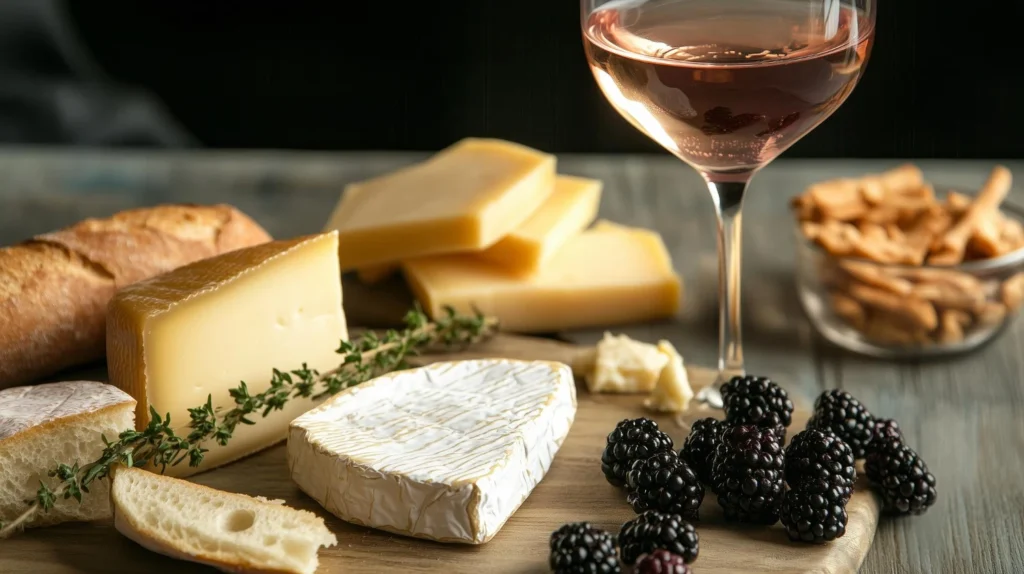
Brie, Camembert, and Robiola offer a creaminess with mushroom and rind notes. Champagne is a great pairing because the effervescence and acidity balance the fat yet do not detract from the creaminess.
Chardonnay works if it is not buttery with oak and has fresh qualities. Chenin Blanc offers orchard fruit flavor with bright acidity. For red, go with something light such as Pinot Noir if the cheese does not taste too buttery and has more of an earthy character from the rind.
Washed Rind Cheese: Funky, Savory, And Rich
These washed rinds, Fontina, Époisses, Reblochon, and Taleggio, can have a very intense aroma and a savory, almost meaty taste. Wines like Gewürztraminer, Riesling, and sparkling wines tend to be a good pairing because their aromatics and acidity can work alongside the cheese rather than in opposition to it.
It gets interesting here: some lighter red wines can pair well with the milder ones, but high-tannin wines like Cabernet Sauvignon will often emphasize the worst traits of these pungent cheese styles. Instead, look for wines that have lift and fruitiness and make you want another bite.
Fontina And Taleggio
Milder among the washed rinds are Fontina and Taleggio. Wines such as Chardonnay, Pinot Gris, or Barbera are capable of reflecting their nutty and fermented qualities. These cheeses are often baked in gratins or grilled sandwiches, and in those applications, the wine’s acidity will be more important than its alcohol.
ÉPoisses And Reblochon
When Époisses or Reblochon are served, wines with aromatic intensity and a bite will work better than oaky Chardonnays or high-tannin red wines. Riesling (off-dry), Champagne, and Gewürztraminer are always good options. The goal here is for the wine to be refreshing between bites of the soft cheese.
Semi-Soft Cheeses: Nutty Gruyère, Gouda, And Havarti
The semi-soft options are Gruyère, young Gouda, aged Gouda and Havarti as their character can range from nutty and buttery to somewhat caramelized. They’re not excessively salty. So either a Riesling or a Chardonnay can work.
You could also opt for a Pinot Noir or even a Beaujolais if the cheeses aren’t too sharp. The classic combination of Gruyère and Pinot Noir is a good practical choice. You’ll be tasting both the earthy fruit notes and the nuttiness without any tannic dominance over the palate.
Hard Cheeses: Cheddar, Parmesan, Pecorino, And Double Gloucester
Higher on the salt, umami and concentration scale are the hard cheeses. Aged cheddar, for instance, stands up well to Cabernet Sauvignon as the fat and salt work with the wine’s structure to soften its tannin.
Parmesan and Pecorino pair with Chianti, Sangiovese and other medium-bodied reds, as the wine’s acidity cuts through the cheese’s salt and umami. Meanwhile, Double Gloucester works with Merlot or even an English sparkling wine, as the cheese’s softer texture calls out for a match that’s either soft or contrastingly crisp.
Cheddar And Cabernet
Sharp cheddar will be tangy; aged cheddar will be nuttier and deeper, but also more concentrated. This is important as you match the cheese to the wine. With Cabernet Sauvignon, a better match is the more mature version of the cheese. Here, the salt and fat soften the wine’s tannin, while the dark fruit of the wine balances the cheddar’s intensity.
Parmesan, Pecorino, And Double Gloucester
For Parmesan and Pecorino, serve these cheeses in chunks, not just grated, and choose a glass of Chianti, Barolo or Sangiovese for their intensity to work against their salt and umami. For a better match with the rounder Double Gloucester, try a Merlot for a smoother pairing.
Blue Cheeses: Salty, Bold, And Veined
Cambozola, Danish Blue, Gorgonzola, Roquefort, and Stilton are salty, bold, and veined. Sauternes, Port, and late-harvest Riesling work because sweetness cushions salt and moldy sharpness.
Here’s the part most people miss. Dry reds often taste metallic with blue cheese. For blue cheese wine pairing success, think dessert-wine logic: sweet, rich, and acidic enough to stay lively.
Baked And Fondue Cheeses: Raclette And Baked Camembert
Raclette, baked Camembert and fondue all transform cheese into melted fat that needs freshness in wine; go with alpine whites, chasselas, dry riesling and sparkling wine for these.
For baked Camembert use champagne or chenin blanc. For raclette, dry riesling or chasselas with potatoes, pickles and melted cheese will taste fresh but the meal will not seem more filling.
Wine And Cheese Pairings To Buy For A Board
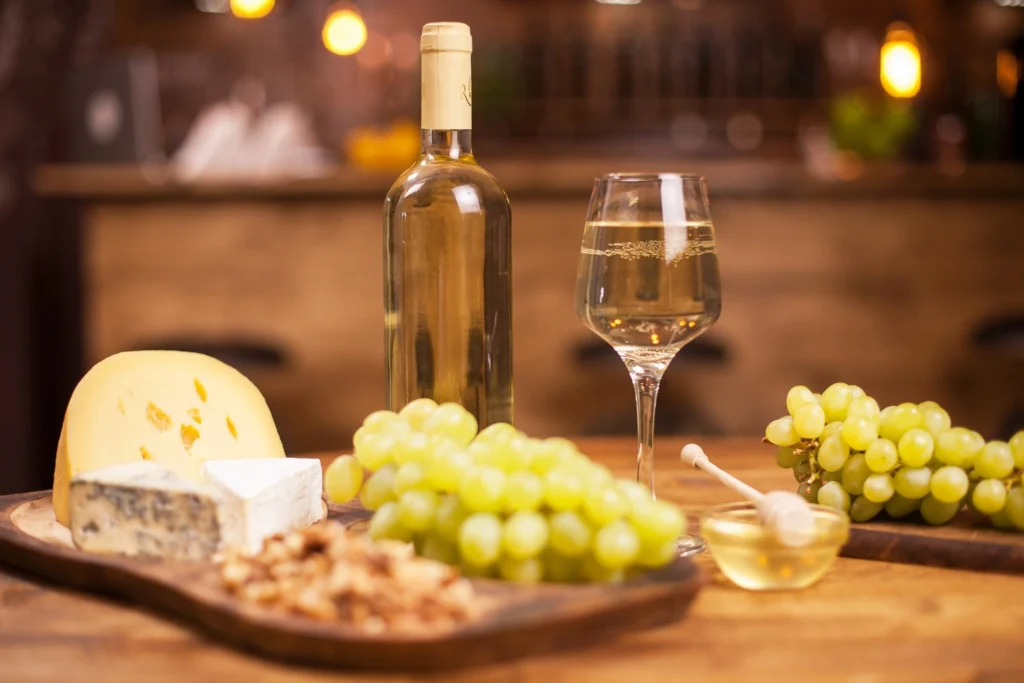
Start with three bottles: a sparkling wine, a Sauvignon Blanc, and a Pinot Noir. You’ll have a fizzy wine for fatty cheeses, a bright white for a young fresh cheese, and a lighter red wine for nutty cheese.
Buy five cheeses to make your board: goat cheese, Brie, Gruyère, sharp cheddar, and blue cheese. This Total Wine & More page lists cheeses by category, and igourmet offers a great cheese guide to help you understand differences.
Quick Pairing Rules And Classic Matches
Whites are generally a safer bet than deep reds, since acidity stands up well to salt and fat, whereas tannins usually have a more limited role to play. If in doubt, a sparkling wine is the one bottle you can take to the table whatever else you may have. And sweet wines? With salty blues.
Some pairings are well established and easy to recall: Port and Stilton, Champagne and Brie, Sauvignon Blanc and Chèvre, Chianti and Parmesan. The Atelier du Vin pairing discussion reminds us that, at root, it is all about balance, and we must resist any temptation to turn pairing into a formula.
Comparison Criteria And Decision Factors
Check different matches with acidity, tannin, sweetness, body and aroma. Fresh? Go with acidity, funky? Go with aroma, salty and blue-veined? Add sweetness.
That’s worth a moment’s reflection. Wine Folly and Wine Enthusiast share their classic examples, Reddit gives some common home-tasting queries, St. Julian Winery frames it in flavor journeys, and Atelier du Vin gives some counterpoints to the oversimplification. Let these all be references, not regulations.
Frequently asked questions
What wine should beginners buy for a simple cheese board?
To begin, a single sparkling wine, Sauvignon Blanc, and Pinot Noir will serve well, alongside the cheeses chèvre, Brie, Gruyère, cheddar, and Stilton. Those cover bright, rich, nutty, firm, and salty, respectively, making this one of those rare occasions in which six bottles is not the answer.
Are white wines usually better with cheese than red wines?
White wines can often be better bets with cheese, because their acidity refreshes the palate of cheese, cutting through fat and salt, and sometimes a wine’s tannin doesn’t play so well when there is a rich or pungent profile in a cheese. But a red still plays well enough with firm, nutty, aged cheese, particularly if the cheese is rich enough that you can keep the wine a little lighter than usual.
Which cheeses go best with Pinot Noir?
Pinot Noir is best suited with Gruyère cheeses and other young Goudas and cheeses made in the Comté style, as well as Camembert and the milder washed-rind cheeses. Pinot’s red fruits and earthiness complement nuttiness and cheese-rind flavors. Avoid very salty blues, which usually need sweetness.
What cheese should you serve with Cabernet Sauvignon?
Cabernet Sauvignon matches up well with an aged cheddar or other cheeses that are firm, salty, and concentrated in flavor. You want the cheese to have some fats and be intense enough to cut through the tannin. So steer clear of fresh chèvre, ricotta, and bloomy triple-cream cheeses when you go with cab.
Why do sweet wines work with blue cheese?
Sweetness goes well with cheese for an entirely different reason: the sugars balance salt and pungent mold flavors along with the creaminess of blue cheese. A Sauternes or Port or Riesling from a late harvest will provide enough richness, as acidity in the wine will keep the match from being cloying, syrupy, or one-dimensional.
What wines pair with baked Camembert or raclette?
Baked Camembert and raclette need wines with enough cut to cut through melted, hot fat: Champagne, Chasselas, dry Riesling, Chenin Blanc, and other dry white Alpine wines from the area are natural partners. If you have to go red, look for a light, lower-tannin style.
Wine and cheese pairing says you should begin with the cheese: Fresh ones need bright, acidic whites; bloomy-rind cheeses, fresher ones; washed-rind styles need wines that are more acid-forward, perhaps with some aromatics; hard cheeses can stand up to reds, and tannins in a lighter red won’t overwhelm the cheese; blue cheeses often play best off sweetness. These guidelines provide a map, not a rulebook. If you want to assemble a cheese board, choose several textures, then open sparkling, a crisp white, and a lighter red before you reach for the bigger, richer wines. That gives your guests reliable options without turning the table into a guessing game.